ESD Workbench Guide
ESD Workbench Guide
An ESD Workbench Safely Dissipates Static Electricity from people and items to keep sensitive electronics on the bench free of electrostatic damage. This is important because electrons are social particles: they like to bump into each other and jump between surfaces. Unfortunately, this is a problem if you’re fabricating semiconductors, where a tiny static discharge could ruin a wafer worth thousands of dollars.
Static electricity is also a problem in dozens of industries, which is why ESD Workbenches exist. They safely reduce the potential for electrostatic shock and provide a self-contained working area with flat surfaces, storage, power, and accessories. In this article, we’ll cover what a static-dissipative workbench is and why it’s useful.
Looking to bring static discharge risk under control? Contact us below to customize an ESD Workbench for your needs.
These companies trust us *
ESD Workbenches prevent electrostatic discharge by integrating semiconductive materials and grounding points.
Electrostatic Discharge (ESD) causes billions of dollars of damage each year to sensitive components.
The best ESD Workbenches adhere to the IEC 61340-5-1 and ANSI/ESD S20.20 standards.
What Is an ESD Workbench?
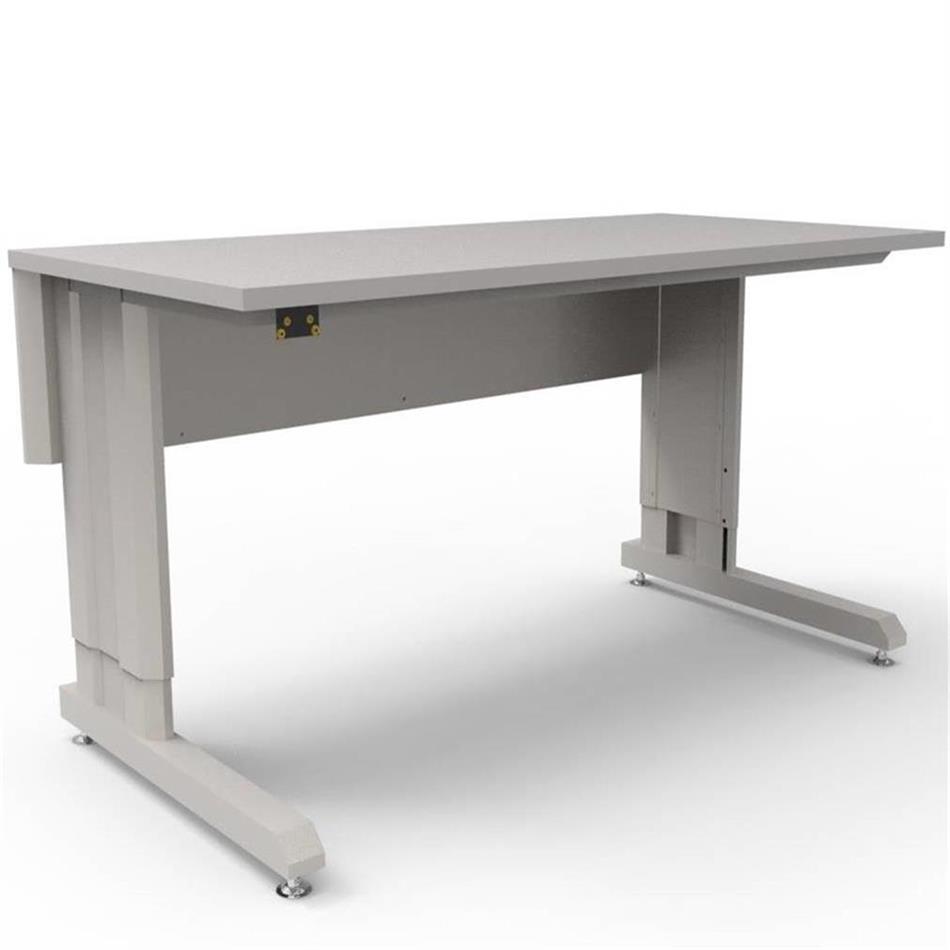
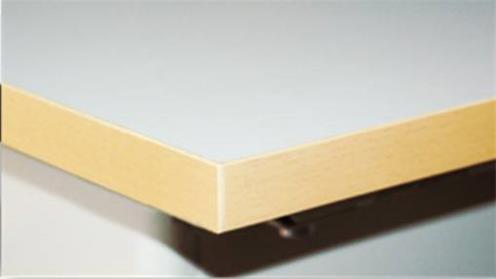
An ESD workbench is a self-contained unit that provides work surfaces, storage, and grounding connections to safely dissipate static charge from people and items that come in contact with it. In contrast to creating a DIY ESD work area, a workbench integrates static dissipative materials into its entire construction for easier setup and use. The bench can include powder-coated steel with a static dissipative layer, along with high-pressure laminate or resin surfaces.
When you’re handling semiconductors or testing electronics, ESD safety matters. Even a tiny Electrostatic Discharge can damage sensitive components.
Workbenches designed to reduce electrostatic discharge usually include a few main components, like a frame, dissipative surface, grounding lugs, mounting back, and storage. Here’s a detailed look at the components you can find on ASIT ESD workbenches:
| ESD Workbench Component | Function |
|---|---|
| ESD Metal Frame | Grounded and stable structure that safely dissipates charge |
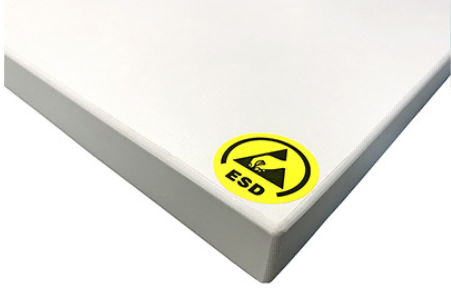
| Static-dissipative Work Surface | Safely reduces electrostatic discharge risk with semiconductive material integrated into the top |
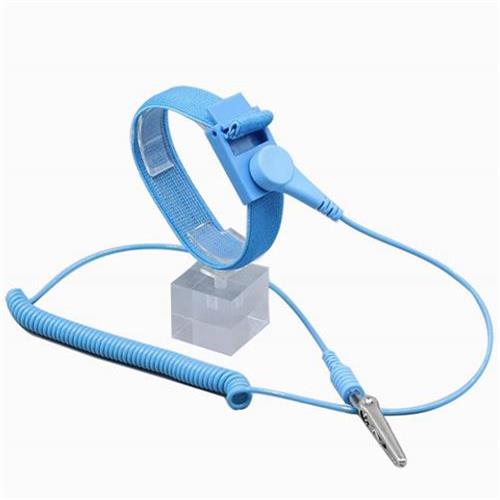
| Grounding Lugs and Wrist-strap Jacks | Connects the bench and operator to a common ground point |
| ESD Rear Frame | Supports mounting shelves, lights, bin rails, and more |
| Steel ESD Shelf | Safe area for storing instruments, parts, and tools |
| ESD Drawers | Lower storage areas with ESD-safe surfaces |
| Overhead Lighting | Illuminates the work surface evenly |
| Antistatic Movable Cabinet | Provides ESD-safe mobile storage under the bench |
| Integrated Power Strip | Provides grounded power for tools and instruments |
For a complete ESD-safe Workstation, you can also use an ionizing fan to neutralize static charge on insulators you’re working with, like plastics or cardboard packaging. Depending on your needs, you can also use ESD-safe soldering stations, ESD Chairs, ESD Mats, Access Floor, ESD Shoes, and ESD Clothing.
ESD Upright Accessory Fram
ESD Perfortaed Panle
Power Chanel M900
DIY ESD Setup vs. Professional ESD Workbench
DIY setups might be cost-effective if you’re a hobbyist or have a small production station or repair shop. That said, applications like electronics manufacturing and production lines need a higher level of ESD safety than DIY setups offer.
A professional ESD Workbench takes much of the manual effort and guesswork out of the equation since multiple parts are already integrated. If you have a DIY setup, you have to remember to use ESD mats on all horizontal surfaces that you or the items may touch, including on upper shelves and inside drawers.
An ESD Workbench automatically includes static-dissipative surfaces on the top, shelves, and drawers. It can also include continuous grounding monitors or can integrate with your monitoring tools.
DIYers also have to verify that all the components of their setup have a resistance range of 10⁶ to 10⁹ Ω (ohms), like mats, cords, and surfaces. A professional ESD workbench that meets ANSI/ESD S20.20 standards will already satisfy these requirements.
Shop By Feature
Why Use a Static-Dissipative Workbench?
Using an integrated ESD workbench provides multiple benefits, including product protection, operational reliability, and compliance with IEC 61340-5-1 and ANSI/ESD S20.20 standards. Let’s take a closer look at a few main benefits.
Protect Products From Electrostatic Damage
The main reason to use an ESD workbench is to protect sensitive electronic components from electrostatic damage. The Sources Of Static Electricity are everywhere. We’ve all walked across the carpet and received a shock from a doorknob, and a shock like that can range from 1,000 to 10,000 volts or more. However, a mere fraction of that can damage certain electronics like integrated circuits, image sensors, and semiconductor nodes.
Maintain Operational Reliability
Your day-to-day production, assembly, and testing operations depend on reliable ESD Workbenches. Sudden static discharge events can damage components and cost a company thousands in rework and logistics.
Simplify ESD Compliance
Using an ESD workbench that is S20.20 certified makes the process of compliance much easier. Instead of managing multiple mats and types of connections, you can have confidence that the full bench unit maintains ESD safety when properly used. Benches also simplify the ESD audit process.
User-Friendly Setup
Another reason to use an ESD Workbench over a DIY bench is the ease of setting up. A workbench already contains the static-dissipative surfaces, grounding points, storage options, and wrist strap integration. Benches can also include power strips for accessible power. So, instead of having to set up five or six different components, you just put the wrist strap on and ensure the ground is connected.
Make ESD Safety Easier
Since ESD workbenches integrate multiple ESD components, there are fewer moving parts for operators to manage. This makes it easier to actually maintain a safe ESD environment for production, assembly, or testing.
Managing Rework
Another direct benefit of a reliable ESD workbench is that it reduces your failure rate and the amount of rework you have to do. And when your rework station itself is ESD-safe, your technicians can confidently disassemble parts and fix soldering without creating even more issues.
Who Uses ESD Workbenches?
ESD Workbenches provide important support in many types of industries for original equipment manufacturers, contract manufacturers, laboratories, and more. Below are a few examples.
- Electronics manufacturing: Reducing static energy in PCP assembly, SMT line operation, and tools used during manufacturing.
- Medical devices: Protecting sensors and control boards to support diagnostic equipment.
- Semiconductor labs: Benches made for cleanrooms protect delicate silicon wafers from static.
- Aerospace/defense: Protecting mission-critical electronics like guidance systems and avionics.
- Testing and quality control: ESD benches support testing equipment and precise calibration during inspection.
- Repair centers: Providing power, storage, and workspace for ESD-safe component repairs.
- Technical schools: Instructors train students on ESD-safe practices with the equipment.
- Contract manufacturers: Maintaining safe assembly and QA of smartphones, routers, and wearable tech.
- Automotive electronics: ESD-safe assembly of sensitive components like ADAS systems and EV battery components.
How To Choose the Right ESD Workbench
To choose the best ESD workbench, consider your needs, verify the ESD bench’s certification, decide on the size and accessories, and review the company’s warranty and service.
1. Consider Your Needs
First, consider your environment and requirements for an ESD workbench. Whether you're running a clean room, industrial floor, or R&D lab, you have specific requirements. For example, you might want an ESD workbench that uses sealed surfaces to prevent off-gassing or introducing particles to the environment of a clean room.
2. Verify It Meets ESD Requirements
Next, verify that the static-dissipative materials of the bench fall within a range of 10⁶ and 10⁹ Ω. This is the range required by the ANSI/ESD S20.20 standards. This range of resistance means the table will draw away harmful static charges slowly (not too fast to create a discharge event).
3. Decide on the Size
Of course, the right size and height of the workbench are important. Your technicians may sit or stand at the bench for long periods of time. The ESD workbench should make it easy to inspect or assemble components without causing unnecessary fatigue. For more flexibility, you might want to consider a bench with adjustable height.
4. Customize Accessories
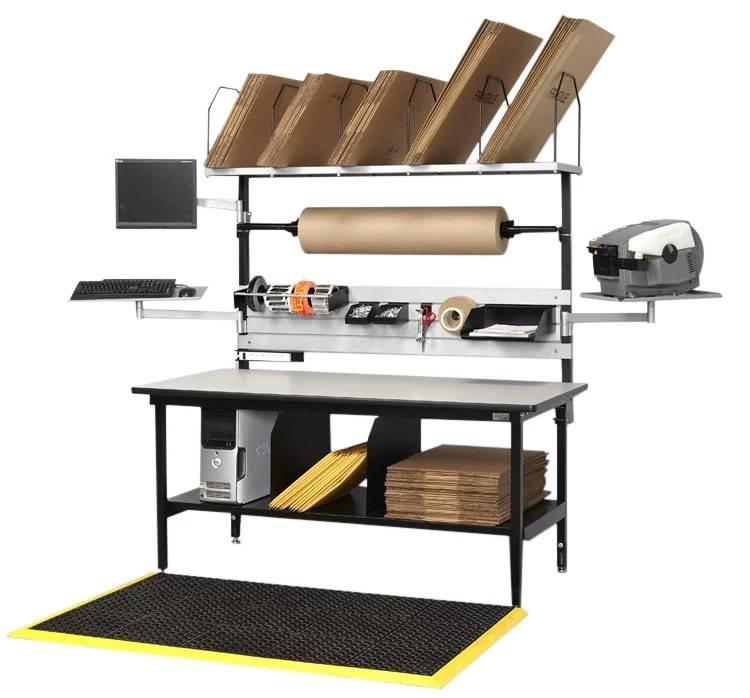
Next, look for accessory and storage compatibility. Most workbenches can support louver panels, perforated panels, lighting, shelves, rails, computer monitors, instruments, and more. The nice thing about configuring a customized workbench is that you can decide what works best for your situation and then order as many as you need. Consider the weight that the workbench can support, too. You might need a reinforced bench if you work with heavy components.
5. Consider Company Support
Finally, look at the company's reputation, warranty, and support. You want to work with a provider that will be responsive if you have questions or issues. ESD workbenches should have solid construction and last for many years, so you don't need to worry about things falling apart, but if something does break within a certain time, the warranty will support you.
Best ESD Workbenches for Different Situations
ASIT ESD Furniture designs and manufactures ESD workbenches that support teams around the world. All ASIT ESD workbenches meet IEC 61340-5-1 and ANSI/ESD S20.20 to dissipate static energy safely. Let’s take a look at a few popular options.
Versatile ESD Workbench
Our standard ESD Workbench is customized as well for many applications. It includes a laminated ESD top along with ESD, safe shelves, and storage areas. The frame is powder-coated with an antistatic coating and made from cold-rolled steel. With multiple sizes and configurations, you can scale a collection of workbenches to fit your production line.
Mobile ESD Workbench
If you reconfigure your production line periodically or perform testing in different areas of your facility, a Mobile ESD Workbench is a great solution. This type of bench has specialized casters that maintain dissipative contact with the ground at all times. It also includes a customizable back panel for attachments, storage, and shelving.
Adjustable ESD Workbench
Our Adjustable ESD Workbench can accommodate operators of different heights, whether they stand or sit to work. The electronic lift makes it easy to change the height of the bench. While it’s adjustable, it’s still heavy-duty and can hold up to 500 kg (about 1,100 lb). This adjustable ESD workbench is easy to customize with your preferred size, storage, and power options.
Shop By Application
How Much Do ESD Workbenches Cost?
ESD Workbenches vary in cost because they are often customized to a specific industrial application. If you have a home computer repair business, you might get by with a DIY setup and only spend a few hundred dollars. Professional ESD workbenches that meet S20.20 standards cost more. They’re also easier to set up, use, and maintain over time, and they may meet your specific needs better.
The final price depends on your requirements for size, accessories, and customization. Reach out for a personalized quote that matches your needs.
What Damage Does Electrostatic Discharge Cause?
ESD causes significant damage that ripples throughout supply chains. It’s cheap to replace a simple diode or resistor that fails, but a whole circuit board can cost thousands if the failure is undetected at first. Below is a quick look at losses from different angles: annual total, revenue share, per device, and per component.
| Type of Loss | Data |
| Annual losses from ESD | Estimates range from $0.5 to $5 billion per year across the electronics sector (ESDA Paper) |
| Share of revenue is lost to ESD | 4 to 8% of total annual revenue for the average electronics manufacturer (InCompliance Magazine) |
| Cost per ESD event at the device level | Ranges from cents to thousands of dollars (ESD Association) |
| Cost per ESD event at the component level | Range from $100 up to $40,000 per unit (NASA Parts Bulletin), and advanced parts can approach $200K each (NASA) |
Shop By Capacity
What Are Annual Losses From ESD?
Losses from ESD events are sizable, but they're also hard to quantify. Some estimates, based on data from the 80s to early 2000s, put losses at a range of $500 million to $5 billion per year across the electronic sector. However, the real cost can be much higher, since ESD failures can affect company reputation and even the safety of the end user, depending on what components are affected.
What Share of Revenue Is Lost to ESD?
Looking at losses from ESD another way, electronics manufacturers lose about 4% to 8% of total revenue from ESD events, according to InCompliance Magazine. That figure is significant and can translate to millions of dollars of lost product yield or production downtime. It also shows that solving problems with ESD can have a huge impact on a business.
What’s the Average Cost Per ESD Event at the Device Level?
Individual device losses can range from a few cents to thousands of dollars, depending on the device being compromised. Simple diodes may cost a few cents to replace after an electric shock. On the other hand, an ESD event could destroy an integrated circuit in a fraction of a second, costing thousands.
When you include rework, labor, logistics, and reputation, the total cost per device can increase even more. For example, for a telecom company, an ESD event during hardware servicing could damage a router and end up causing unexpected downtime for its customers.
What Does an ESD Event Cost at the Component Level?
Of course, electrostatic discharge might not just affect a specific device, but also a whole component. This could require you to replace the entire unit, and that can cause losses to skyrocket. The replacement cost depends on the part’s complexity, too.
For example, NASA data shows its components cost anywhere from $100 to $40,000 to replace after ESD damage, and costs increase the longer ESD damage goes undetected. Some devices approach $200,000 to replace after an ESD event.
All of this underscores how critical ESD protection is to preventing costly failures. If you produce, assemble, or test high-value electrical components, the costs of an ESD program can be tiny in comparison to the damage you can prevent.
ESD Workbench Frame Colors
NO-ESD Workbench Frame Colors

NO-ESD RAL 7035 Light Grey

NO-ESD RAL 5012 Light Blue

NO-ESD RAL 9003 Signal White

NO-ESD RAL 9004 Signal Black
ESD Workbench Countertop Material
ESD Workbench Accessories
Ready to Work Smarter, Safer, and Without the Shock?
Whether you need something ready to go or you want to customize a full setup, we’ve got you covered. Our ESD Workbenches are made for real workspaces, built with precision, and designed to adapt to your process.
ASIT Office
Address:Building 19#1414,NO.2 ZhuHai Road,Changshu City
Monday - Friday 08:00 - 17:00
Email:[email protected]
Whatsapp:+86-18351643119
Phone:+86-18913772810
Compliance Standards for ESD Workbenches
When an ESD workbench is fully compliant, it meets standards like the IEC 61340-5-1 and ANSI/ESD S20.20. But what do these standards mean? Let’s take a closer look.
IEC 61340-5-1 and ANSI/ESD S20.20 Standards
IEC 61340-5-1 is the global standard for ESD control requirements, while ANSI/ESD S20.20 is the counterpart in the United States, and EN 61340 is the equivalent in Europe. Any certified ESD workbench must meet these standards. Be aware that not all benches or surfaces sold as ‘anti-static’ meet all the requirements. Technically, an ESD bench that satisfies these standards must have a tested surface resistance between 10⁶ and 10⁹ Ω, a grounding system, and documented test results.
ANSI/ESD STM4.1 Testing Process
This document provides detailed instructions for how to test surfaces to see if they meet the guidelines laid out in S20.20. The basic test of a flat surface requires a resistance meter with two 5 lb electrodes. In a point-to-ground test, you set one electrode on the surface and connect the other to the ground. In a point-to-point test, you set both electrodes at different points on the surface. You then apply test voltages and record the reading.
In-house ESD technicians or quality engineers will perform these tests periodically, depending on the type of production. A repair shop might perform testing annually, while a precision manufacturer in aerospace or defense might test every other month. Third-party auditors may also test the facility periodically.
ISO 14644 Cleanroom Compatibility
This standard describes how equipment in a clean room should function. To be compatible, an ESD workbench should have limited outgassing, be completely smooth, and not produce any particles or flakes that can contaminate the environment. Even tiny particles can cause problems for the sensitive production of semiconductors or medical devices.
Bottom Line: Are ESD Workbenches Worth It?
ESD workbenches are worth it and are even crucial for many types of industries. When an imperceptible shock could compromise an integrated circuit or even an entire component, you want to limit electrostatic discharge as much as possible during manufacturing and handling.
ESD workbenches integrate static-dissipative surfaces and provide grounding points for people and objects that come in contact with them. At the end of the day, a small investment in a workbench can reduce failure rate and save you money down the line.
If you’re looking for a reliable ESD workbench to customize for your application, reach out below.
ESD Workbench FAQs
What Does ESD Stand For?
ESD stands for electrostatic discharge. Surfaces can build static charges at any time, and a sudden discharge can damage sensitive components.
What is ESD Equipment?
ESD equipment has been designed to safely reduce the risk of static shock for sensitive electronics. For example, ESD mats, tables, and chairs allow technicians to work on things like integrated circuits without damaging the components.
How Do You Set Up An ESD Workstation?
Set up an ESD workstation by connecting an ESD work surface and wrist strap to ground. You can use a mat on a table or use an integrated ESD workbench, which includes grounding points and a wrist strap jack.
What is an ESD Workshop?
An ESD Workshop is a production, lab, or training facility with equipment like ESD Workbenches and ESD Chairs that prevent static buildup so people can work on sensitive electronics. ESD workshops prevent static shocks from human-to-device and device-to-surface contact.