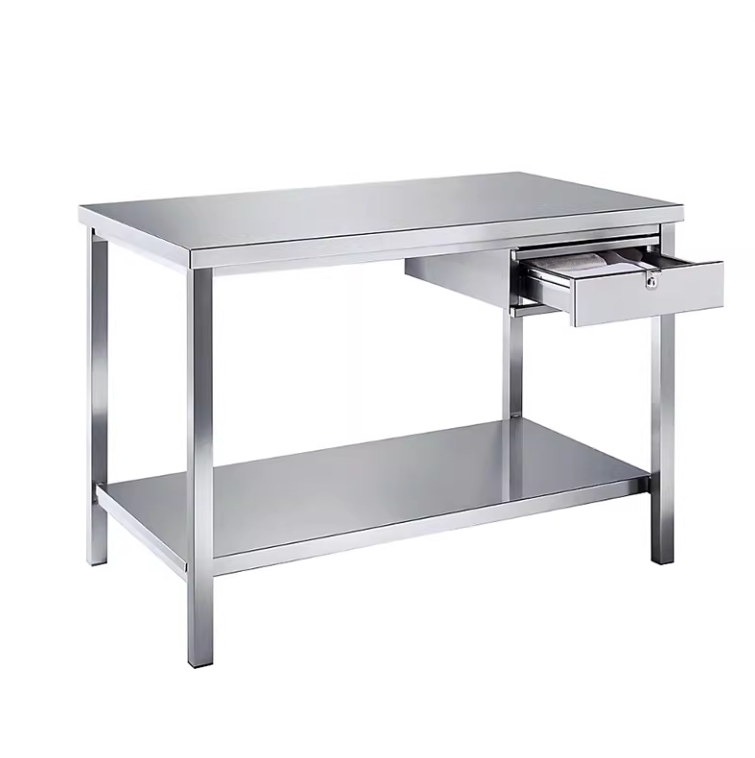
Laboratory Stainless Steel Workbench

$1.00

The bench your lab works on every day is either supporting the precision of the work happening on it or quietly undermining it. A surface that absorbs chemical spills, harbors bacteria between cleaning cycles, or flexes under analytical instruments does not just create a maintenance problem. It creates a contamination risk, a compliance gap, and a cost that compounds with every passing month. ASIT ESD Furniture laboratory stainless steel workbenches are built on a fully welded cold-rolled steel frame with a SUS304 or SUS316 non-porous surface that resists chemical exposure, handles daily disinfection, and stays hygienic through the kind of repeated use that research, clinical, and pharmaceutical environments put a bench through every shift. Available in standard lengths from 1200 to 2280 mm with widths up to 900 mm, and configurable with drawers, upper shelving, height adjustment, power integration, and LED lighting.

Length:800/1000/1200/1400/1500/1600/1800/2000mm
Width:600/700mm
Height:750mm
Material Options:• SUS201 Stainless Steel • SUS304 Stainless Steel (Food / Cleanroom Grade) • SUS316 (Optional)
Material Thickness:·Tabletop Thickness: 25*1.2mm ·Frame Thickness: 40*40*1.5mm
Load Capacity:300KG
Surface Finish:Matte Finish
Structure Type:·With Lower Shelf ·With Drawers ·With Backsplash ·Adjustable Feet ·Castors Optional
Assembly Type:·Knock-down Structure (Flat Packed) ·Fully welded Structure
Application:·Laboratory ·Food Processing ·Cleanroom ·Electronics Assembly

Please Note:

  • Standard ESD Workbench Frame Color 1.ESD RAL 7035 Light Grey 2.ESD RAL 5012 Light Blue
  • Standard NO-ESD Workbench Frame Color 1.RAL 7035 Light Grey 2.RAL 5012 Light Blue 3.RAL 9003 Signal White 4. RAL 9004 Signal Black
  • We offer both Standard Workbench Sizes Length:1200/1530/1830/2280mm; Width:600/750/900mm and Customized Solutions to meet your specific needs.

  • The prices shown on this website are preset reference values and do not represent the final quotation.

  • No online payment is required — we do not support direct payments through the site.

  • Clicking “Add to Cart” allows you to select multiple products and submit an inquiry at once.

  • Clicking “Place Order” will simply send your order details to us via email. We will get back to you with a formal quotation shortly.

  • You can also reach out to us directly by clicking the “Email Us” button on the page.

Name
Drag & Drop Files, Choose Files to Upload You can upload up to 5 files.
SKU: Laboratory Stainless Steel Workbench Category:
Description

The Bench Your Lab Works On Is Either Built For It Or Working Against It

Most labs invest heavily in the right instruments, the right protocols, and the right people. Then they put a bench underneath all of it that was never designed for the environment it sits in, and every one of those investments starts working against itself.

A porous surface absorbs chemical spills instead of letting them wipe away cleanly. Bacteria and microbes find places to survive between cleaning cycles. The wrong stainless grade corrodes under the cleaning agents your lab uses every day, pitting the surface and creating exactly the kind of contamination risk your protocols are designed to prevent. A frame that flexes under a mass spectrometer or high-precision instrument introduces measurement errors that are difficult to trace back to the bench. And a surface that starts degrading after two years in a lab that should run for twenty means replacement costs that were never in the budget.

ASIT ESD Furniture laboratory stainless steel workbenches are built to eliminate those problems at the source. The SUS304 or SUS316 stainless surface is non-porous, so it does not absorb spills, does not give bacteria a place to survive, and handles the disinfectants, solvents, and cleaning agents your lab uses without degrading. The fully welded cold-rolled steel frame stays rigid under analytical instruments, heavy equipment, and sustained load, so the surface that supports your work stays flat and stable through every shift. And the configuration is built around how your lab actually operates, so the bench supports your workflow instead of creating problems around it.

Choosing The Right Surface For Your Laboratory Workbench

The surface material on your laboratory workbench determines whether the bench supports your lab's work for decades or starts creating problems within months. Choosing the wrong surface for your lab's chemical exposure, cleaning agents, and compliance requirements is one of the most common and most costly mistakes in laboratory setup. ASIT offers three surface options so you can match the material to what your lab actually handles:

SUS304 — The Standard for Most Research, Clinical, and Pharmaceutical Labs 

For laboratories running regular wipe-downs with alcohol-based cleaners, biocides, and standard disinfectants, SUS304 gives you the non-porous, corrosion-resistant surface that research, clinical, biotech, and food science labs specify. It does not absorb spills, does not harbor bacteria, and handles the daily cleaning protocols that laboratory hygiene standards require. Widely accepted as food-grade and the industry standard for laboratory stainless steel workbench surfaces across most regulated environments.

SUS316 — When Chemical Exposure Is More Demanding 

Chloride-rich cleaning agents, concentrated acids, and aggressive solvents will eventually pit and corrode a SUS304 surface, contaminating samples and creating the structural and hygiene problems you bought stainless steel to avoid. SUS316 adds molybdenum to the alloy, giving it substantially stronger resistance to corrosion and chemical attack, making it the right specification for pharmaceutical manufacturing, sterile processing rooms, and any laboratory where chemical exposure is more aggressive than standard disinfection.

Epoxy or Phenolic Resin — When Heat and Concentrated Chemicals Come First 

For chemistry labs and research environments where concentrated acids, strong bases, and high heat regularly contact the surface. Epoxy resin is chemically inert against the most aggressive substances that would damage stainless steel long-term. Phenolic resin offers chemical and heat resistance at a practical price point for general-purpose laboratory work. ASIT helps you determine which surface suits your lab's specific chemical and thermal exposure before you order.

Not sure which surface your lab requires? Tell ASIT what chemicals your bench will be exposed to, what cleaning agents the lab uses, and what compliance standard the environment operates under, and you will get the right recommendation before the order is placed.

Features That Make An Asit Laboratory Stainless Steel Workbench Worth Specifying

Non-Porous Stainless Surface That Does Not Harbor Contamination 

Porous materials absorb spills, giving bacteria and microbes a place to survive and multiply between cleaning cycles. A non-porous stainless steel surface does not absorb anything. It cleans completely with every wipe-down, stays hygienic through daily disinfection protocols, and does not become a contamination source in an environment built to prevent contamination.

Fully Welded Cold-Rolled Steel Frame 

A frame that flexes under load introduces instability to every instrument and procedure sitting on it. The fully welded cold-rolled steel frame on ASIT laboratory stainless steel workbenches stays rigid under sustained weight, does not develop play in joints over time, and gives precision instruments the stable, vibration-resistant foundation that accurate results require.

40 × 100 × 1.5 mm Legs and 50 mm Thick Worktop 

Leg dimensions and worktop thickness are where the difference between a laboratory workbench and a repurposed office table shows up most clearly under load. ASIT lab bench legs and worktops are sized for genuine laboratory use, supporting instruments and equipment without deflection or surface movement.

SUS304 or SUS316 Matched to Your Lab's Chemical Exposure 

The grade of stainless steel determines how the surface performs under your specific cleaning agents, disinfectants, and chemical exposure. ASIT helps you match the grade to what your lab actually uses before the order is placed, so the bench performs correctly from the first shift rather than showing corrosion after the first few months.

Standard Sizes With Custom Options 

Standard lengths of 1200, 1530, 1830, and 2280 mm with widths up to 900 mm. Custom sizes available for labs with specific layout or footprint requirements.

Configuration Options That Support the Lab 

Drawers, upper shelving, height adjustment, power integration, LED lighting, and castors are all available so the bench is configured around how your lab actually operates rather than forcing your team to work around the furniture.

Where Asit Laboratory Stainless Steel Workbenches Make The Most Difference

Pharmaceutical Research and Manufacturing 

Pharmaceutical labs combine strict hygiene requirements with aggressive cleaning agents and the precision demands of R&D and manufacturing work. A surface that corrodes under biocides, a frame that flexes under analytical instruments, or a bench that cannot be genuinely decontaminated creates compliance risk alongside operational problems. SUS316 stainless, a fully welded frame, and a non-porous surface give pharmaceutical workstations a bench that holds up to both demands.

Clinical and Diagnostic Laboratories 

Clinical labs need surfaces that clean completely between patient samples, resist the disinfectants used in high-throughput diagnostic environments, and stay stable under the instruments that produce the results that clinical decisions depend on. Stainless steel gives clinical workstations the hygiene and stability that that work requires.

Biotech and Life Sciences Research 

Biotech environments handle biological samples, reagents, and equipment that demand surfaces capable of repeated sterilisation without degrading. A non-porous stainless surface that does not harbor microbial contamination between cleaning cycles is not optional in these environments. It is the baseline requirement.

Food Science and Quality Control Labs 

Food science labs specify stainless steel because SUS304 and SUS316 are widely accepted as food-grade materials that resist corrosion, clean thoroughly, and support the hygienic handling requirements that food testing and quality control environments operate under.

Research Institutions and University Labs 

Research labs need benches that hold up through years of varied chemical exposure, heavy equipment, and constant use without requiring frequent replacement or creating the maintenance burden that disrupts research continuity. The 20-30 year lifespan of a properly specified stainless steel workbench makes it the right long-term investment for any serious research environment.

Why Choose Asit Esd Furniture For Laboratory Stainless Steel Workbenches

The bench your lab works on for the next two decades should be specified correctly the first time. The wrong surface grade corrodes under your cleaning agents. The wrong frame flexes under your instruments. Wrong configuration forces your team to work around the bench instead of with it. Here is what makes ASIT ESD Furniture the right choice:

Built by a Manufacturer, Not a Reseller 

ASIT ESD Furniture manufactures directly, so you get factory pricing, direct control over your specification, and no middleman between your requirements and the people building the bench.

Surface Matched to Your Lab's Chemical Exposure Before You Order 

Most suppliers list options. ASIT helps you choose the right one. Tell the team what chemicals and cleaning agents your bench will be exposed to, and you get a recommendation that fits your lab's actual requirements rather than the surface that is easiest to ship.

Custom Configurations as Standard 

Standard sizes, custom dimensions, surface selection, drawer and shelving options, height adjustment, power integration, and frame colour are all handled directly without treating your requirements as a special exception that delays the quote.

Nearly Two Decades of Manufacturing Experience 

ASIT ESD Furniture has been building laboratory and controlled environment furniture since 2005. That experience goes into how the frame is welded, how the surface is matched to the environment, and how the configuration supports the lab before the order is confirmed.

A Quotation Back Within 24 Hours 

Send your lab type, size, surface requirements, and configuration and you will receive a formal quotation within 24 hours.

Ensure Your Lab Has A Workbench That Supports The Precision Of The Work Happening On It

Every shift your lab runs on the wrong surface is a shift where contamination risk is higher than it needs to be, cleaning takes longer than it should, and the bench under your instruments is less stable and less hygienic than the work demands. Fix that with a bench specified correctly for your lab from the start.

Send ASIT ESD Furniture:

  • Your lab type and the work it handles
  • The chemicals and cleaning agents the bench will be exposed to
  • The size and configuration you need
  • Whether you require drawers, shelving, height adjustment, or power integration

You will receive laboratory stainless steel workbench options and pricing matched to your lab's actual requirements, with a formal quotation back within 24 hours.

FAQs

What stainless steel grade is best for a laboratory workbench?

SUS304 suits most research, clinical, pharmaceutical, and food science laboratories running regular disinfection with alcohol-based cleaners and standard biocides. SUS316 is the right choice where the lab uses chloride-rich cleaning agents, concentrated acids, or aggressive solvents that would eventually corrode a SUS304 surface. ASIT can help you match the grade to your lab's specific chemical exposure before you order.

Why choose stainless steel over other lab bench surface materials?

Stainless steel is non-porous, so it does not absorb spills, does not harbor bacteria between cleaning cycles, and cleans completely with every wipe-down. Porous materials like wood and standard laminate absorb chemical spills and provide a surface for microbial growth that creates contamination risk in environments built to prevent it. Stainless steel also has a 20-30 year lifespan that makes it the right long-term investment for any serious laboratory environment.

When should I choose epoxy or phenolic resin instead of stainless steel?

Epoxy resin is the right choice when the lab handles concentrated acids, strong bases, or high heat that exceeds what stainless steel can withstand long-term. Phenolic resin offers chemical and heat resistance for general-purpose lab work at a practical price point. ASIT helps you determine which surface suits your lab's specific exposure before the order is placed.

Can I get a height adjustable laboratory stainless steel workbench?

Yes. Height adjustment allows technicians to shift between seated and standing work without disrupting instruments or workflow. ASIT can confirm the right adjustment mechanism for your lab's requirements.

What sizes are available?

Standard lengths are 1200, 1530, 1830, and 2280 mm with widths up to 900 mm. Custom sizes are available for labs with specific layout or footprint requirements.

Can I add drawers, shelving, power integration, or LED lighting?

Yes. Drawers, upper shelving, power strips, LED lighting, castors, and height adjustment are all available. ASIT configures the bench around how your lab actually operates.

Is this workbench suitable for pharmaceutical and clinical environments?

Yes. SUS304 and SUS316 stainless steel are the standard surface materials for pharmaceutical, clinical, and biotech laboratory furniture because they support repeated sterilisation, resist aggressive cleaning agents, and do not harbor contamination between cleaning cycles. ASIT can help you confirm the right specification for your compliance requirements.

Let's Design
Shipping & Payment Terms
Contact US